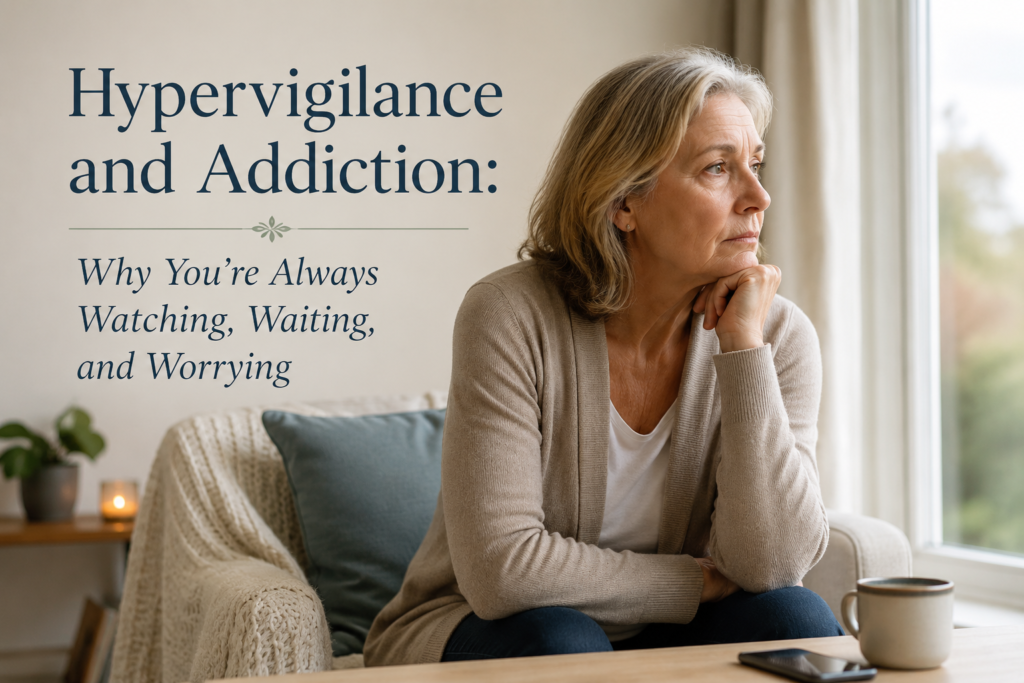
You may not think of yourself as dealing with hypervigilance and addiction-related stress.
You might just think you are tired.
Or anxious.
Or easily irritated.
Or unable to relax.
Or always waiting for the next thing to go wrong.
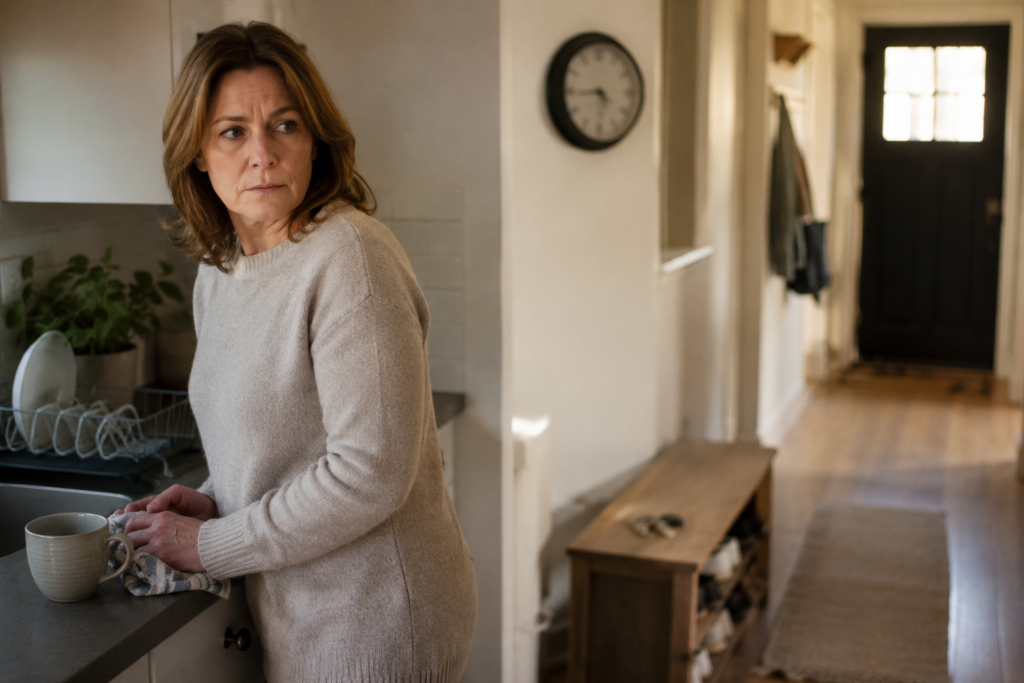
You might find yourself checking their mood as soon as they walk into the room. Listening for changes in their voice. Watching their eyes. Noticing whether they are restless, defensive, unusually cheerful, withdrawn, secretive, apologetic, or too quiet.
This is how hypervigilance and addiction can begin to shape everyday life when someone you love becomes unpredictable.
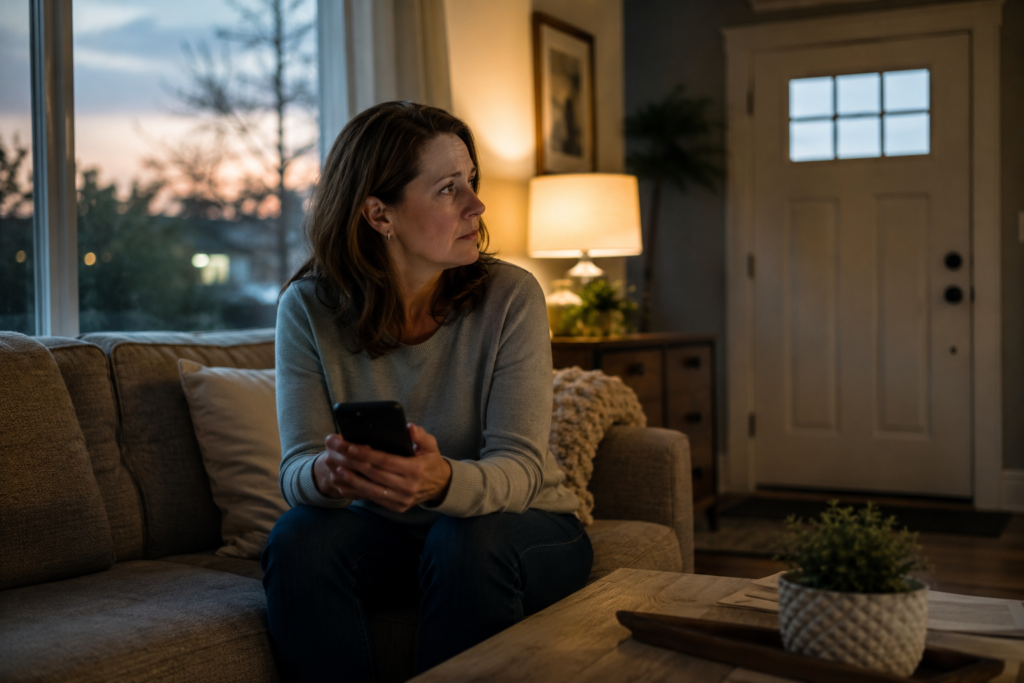
You may check your phone more often than you want to admit.
You may replay conversations in your head.
You may lie in bed exhausted but unable to properly switch off.
And if someone asks what is wrong, you might not even know how to explain it.
Because nothing may be happening in that exact moment.
But your body is still bracing.
When you love someone with an addiction, your nervous system can learn to live on alert.
This is one of the reasons why loving someone with addiction is so exhausting — your body may be working even when nothing obvious is happening.
Not because you are dramatic.
Not because you are weak.
Not because you are looking for problems.
But because, over time, uncertainty teaches the body to watch.
What is hypervigilance and addiction-related stress?
Hypervigilance is commonly understood as a heightened state of alertness where the body stays on guard for possible danger or threat.
In plain English?
It is when your body keeps watch even when your mind is trying to rest.
You may be sitting in a quiet room, but inside you are scanning.
What mood is he in?
Has she been drinking?
Is he using again?
Why hasn’t she replied?
Is that apology real this time?
Is he telling the truth?
Should I say something?
Should I stay quiet?
Is tonight going to be peaceful, or is everything about to fall apart?
That is not ordinary concern.
That is your system trying to predict pain before it arrives.
And when addiction has brought chaos into your home, relationship, or family, that response can start to make a terrible kind of sense.
Addiction trains you to watch for signs
Addiction is not only hard because of the substance, behaviour, or relapse cycle.
It is hard because of the unpredictability.
Hypervigilance and addiction often go hand in hand because addiction brings so much uncertainty into ordinary life.
One day things may seem calm.
The next day everything changes.
When reasoning, explaining, pleading, or trying to “make them understand” does not change the addiction cycle, it is easy to start relying on watching, scanning, and reading the room instead.
There may be promises, apologies, defensiveness, secrecy, blame, withdrawal, anger, tenderness, and crisis — sometimes all in the same week.
You may have lived through enough broken promises to know that words and reality do not always match.
You may have heard “I’m fine” when something was clearly wrong.
You may have believed “never again” more than once.
You may have relaxed too soon before, only to be blindsided.
So now your body tries to get ahead of the next shock.
You start watching for clues.
The tone of a text.
The way they shut a door.
The time they come home.
The smell of their breath.
The missing money.
The change in routine.
The little details other people would not even notice.
And this is where it gets confusing.
Because sometimes your watchfulness is accurate.
Sometimes you do notice things others miss.
Sometimes your gut is right.
That is part of what makes hypervigilance so hard to unwind.
It may have protected you at times.
It may have helped you prepare.
It may have helped you spot danger early.
But something can be understandable and still be exhausting.
Something can be protective and still cost you too much.
You are not “just anxious”
When hypervigilance and addiction are part of your daily life, your reactions may have more to do with repeated stress than personal weakness.
Many women who love someone with an addiction start to blame themselves for how tense they have become.
They tell themselves:
“I need to calm down.”
“I’m overthinking everything.”
“I’m too sensitive.”
“I’m always suspicious now.”
“I don’t like who I’ve become.”
But before you make yourself the problem, pause.
Has your life actually been peaceful?
Has there been real consistency?
Has trust been repeatedly repaired through changed behaviour over time?
Have you been living in an environment where honesty, safety, and emotional steadiness are the norm?
Or have you been trying to function inside repeated uncertainty?
Because there is a difference between anxiety that comes from imagination and alertness that comes from lived experience.
If you have been lied to, blamed, manipulated, frightened, disappointed, or repeatedly pulled into crisis, your body may have learned that relaxing is risky.
That does not mean every fear is fact.
It does not mean every suspicion is true.
It does not mean your nervous system should now be in charge of every decision.
But it does mean your reaction has a history.
And that matters.
Why it is so hard to relax
This is why hypervigilance and addiction can leave you exhausted even on the quieter days.
People may say things like:
“Just stop worrying.”
“Try not to think about it.”
“You need to look after yourself.”
“Go and have a bath.”
And look, baths are lovely. Candles have their place. A cup of tea can be a small mercy.
But a lavender-scented soak is not going to undo years of living with emotional whiplash.
You cannot simply tell your body to relax when it has learned that calm often comes before the next crisis.
Your mind may understand that you need rest.
But your body may still be asking:
Is it safe yet?
Can I stop watching now?
What if something happens while I’m not paying attention?
What if I miss the signs?
What if I let my guard down and everything falls apart?
This is one of the cruelest parts of loving someone with an addiction.
Even when nothing is happening, you may not feel free.
Because your body is not only responding to the present moment.
It is remembering the pattern.
Hypervigilance can start to shrink your life
At first, watching may feel responsible.
You are trying to keep things together.
You are trying to prevent harm.
You are trying to understand what is happening.
You are trying to protect yourself, your children, your finances, your home, your peace, or the person you love.
But over time, constant watching can become its own prison.
You may stop noticing what you need.
You may lose interest in things that used to matter to you.
You may find it hard to be present with friends or family.
You may struggle to concentrate.
You may feel guilty when you enjoy yourself.
You may become irritable, snappy, flat, foggy, or numb.
You may feel as if your whole emotional weather depends on what they are doing.
Are they okay?
Are they using?
Are they lying?
Are they safe?
Are they coming home?
Are they going to work?
Are they angry?
Are they sorry?
Are they changing?
And somewhere in all that watching, you can disappear from your own life. Not in one dramatic moment. More like a slow fading.
A little less sleep.
A little less joy.
A little less trust in yourself.
A little less ability to think about your own future.
And that is too high a price.
The hard truth: watching does not give you control
This is the part that can be difficult to hear.
Your watching may feel like protection. But it does not give you control over their addiction.
You can notice the signs.
You can read the mood.
You can predict the cycle.
You can ask the careful question.
You can avoid setting them off.
You can prepare for the fallout.
You can check, monitor, remind, reason, plead, warn, and worry.
This is part of why you keep trying even when you’re exhausted — because watching can feel like the only thing standing between calm and chaos.
And still, you cannot make them choose recovery.
That is not because you have failed. It is because their recovery cannot be built out of your constant alertness.
Sometimes, without meaning to, the constant watching and rescuing can become part of the wider pattern of when helping keeps them sick.
Your nervous system cannot become the treatment plan.
Your exhaustion cannot become the safety net.
Your ability to anticipate problems cannot be the thing holding everything together.
That is not love. That is survival.
And survival is not a place to build a life from.
You do not have to become careless to stop being hypervigilant
One fear many women have is this:
“If I stop watching, doesn’t that mean I don’t care?”
No. It means you are beginning to understand what is yours to carry and what is not.
You can care without monitoring every breath.
You can love someone without making their choices the centre of your nervous system.
You can be wise without being consumed.
You can set limits without becoming cold.
You can pay attention to reality without abandoning yourself.
The goal is not to become detached in some hard, frozen, “I don’t care what happens” way.
That is not healing. That is armour.
The goal is to become steadier.
Clearer.
Less controlled by the next mood, message, promise, apology, or crisis.
You are allowed to come back into your own body.
You are allowed to stop living as if your only job is to anticipate disaster.
A steadier question to ask yourself
When you notice yourself scanning, checking, worrying, or mentally chasing the next possible problem, try asking:
“Is there something I need to act on right now, or is my body remembering past danger?”
This is not a magic sentence.
It will not instantly calm everything down.
But it can help you create a small space between the fear and your next move.
Sometimes the answer will be:
“Yes, I need to act.”
If there is immediate danger, abuse, threats, violence, risk to children, medical crisis, or someone is unsafe, then this is not a mindset issue. It is a safety issue. Please seek appropriate emergency or crisis support in your area.
But sometimes the answer may be:
“No, nothing is happening right now. My body is bracing because it has had to brace before.”
That moment matters.
Because it helps you begin to separate present reality from old alarm.
Not perfectly.
Not instantly.
But gently.
One moment at a time.
Coming back to yourself does not mean pretending everything is fine
This is important.
You do not have to minimise what is happening.
You do not have to talk yourself out of reality.
You do not have to slap a positive thought over a painful situation and call it growth.
Good grief, no. That is just denial wearing lip gloss.
Coming back to yourself means you stop making their addiction the only thing your body is allowed to respond to.
It means you begin asking:
What do I need?
What is true right now?
What is mine to deal with?
What is not mine to control?
What boundary would protect my peace, safety, or stability?
What support do I need instead of carrying this alone?
What would I do today if I mattered too?
That last question may feel confronting. But it is necessary. Because you do matter too.
Not only when they are sober.
Not only when the crisis passes.
Not only when everyone else is okay.
Now.
In the middle of this.
One small practice: name what you are scanning for
If you are used to living on alert, do not try to force yourself into calm. Start with honesty.
The next time you notice yourself watching, waiting, or worrying, pause and name it.
You might say quietly to yourself:
“I am scanning for signs he has been drinking.”
“I am checking her mood because I am afraid of another argument.”
“I am waiting for the next broken promise.”
“I am worried that if I relax, something bad will happen.”
“I am trying to feel safe by staying alert.”
This may sound simple, but naming the pattern helps you step back from it.
It reminds you:
“This is something happening in me. It is not all of me.”
Then take one small physical action that brings you back into the present.
Put both feet on the floor.
Relax your jaw.
Unclench your hands and shoulders.
Look around the room and name five things you can see.
Take a slow breath out.
Not because breathing fixes addiction.
It does not.
But because your body deserves signals of safety that are not dependent on their behaviour.
That is the beginning of reclaiming yourself.

You are allowed to stop living on watch
If you have been living in hypervigilance, you may not even realise how much energy it has taken.
The watching.
The wondering.
The interpreting.
The preparing.
The hoping.
The dread.
The constant inner calculation of what might happen next.
No wonder you are tired.
No wonder ordinary rest does not touch the edges.
No wonder you feel unlike yourself.
There is nothing weak about you.
There is nothing silly about you.
There is nothing wrong with you for having adapted to chaos.
But now comes the next question:
Is this how you want to keep living?
Not because you should be able to switch it off overnight.
Not because healing is simple.
Not because the situation is easy.
But because your life deserves more than waiting for the next crisis.
You are allowed to want steadiness.
You are allowed to want peace.
You are allowed to want support that helps you think clearly again.
You are allowed to stop measuring your safety only by someone else’s choices.
A gentle next step
If this article felt uncomfortably familiar, you are not alone.
Many women who love someone with an addiction spend years watching, waiting, worrying, and calling it love, responsibility, or just “what has to be done”.
But there is another way to begin.
Not by abandoning them.
Not by pretending you do not care.
Not by suddenly becoming fearless.
But by learning what is yours to carry, what is not yours to control, and how to come back to yourself with steadiness and compassion.
That is the work we do here.
And if you are ready for a small next step, I invite you to start with The List — my free training for women who love someone with an addiction and feel exhausted from trying to work out what to do next.
It will help you begin sorting through the pressure, the confusion, and the constant mental load, so you can take one steadier step forward.
Because you may not be able to make them stop.
But you can begin to stop losing yourself.