
What This Relationship Is Trying to Teach You
When you love someone with addiction, the pain isn’t random. Here’s what this experience may be asking of you—and why it’s so hard to step back.
Why do you keep trying even when you’re exhausted? This post explores the emotional patterns — hope, attachment, identity, and fear — that keep you stuck in a relationship affected by addiction, and where change really begins.
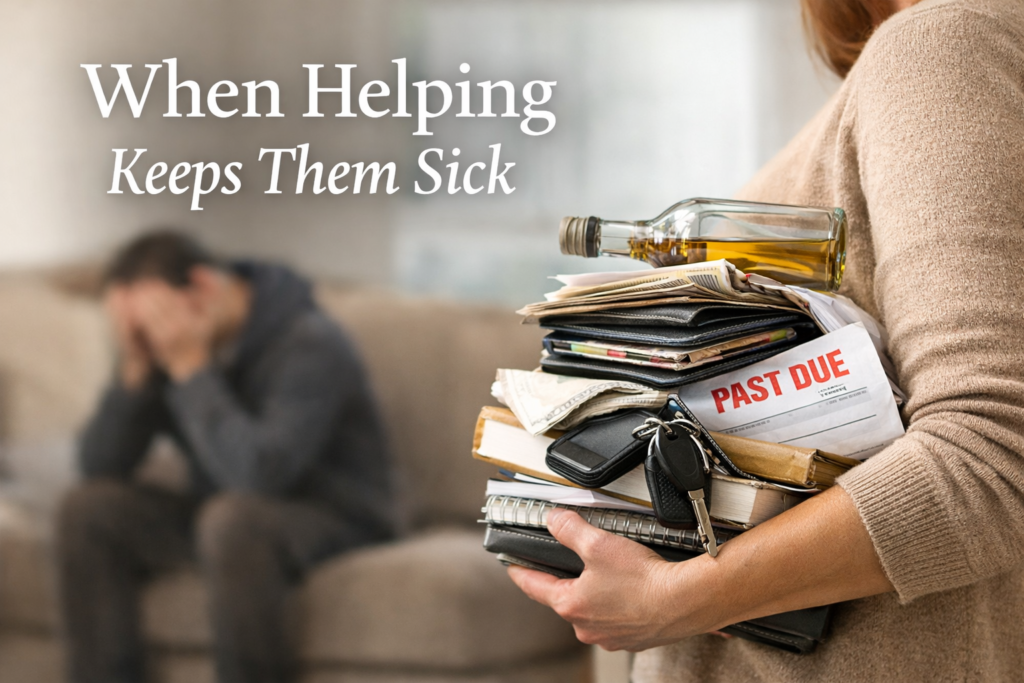
When someone you love is struggling with addiction, helping can feel like the most natural thing in the world. But sometimes the very things done out of love quietly protect the addiction from its consequences. This article explores the difficult truth about “borrowed consequences” — and why constantly rescuing someone may be keeping both of you stuck.
Feeling intense guilt when setting boundaries with someone you love? When addiction is involved, saying no can trigger fear, anxiety, and the urge to fix everything. Here’s why that guilt appears — and why protecting yourself is still healthy.
When you love someone with addiction, care can quietly become rescue. This article explores the difference — and how over-helping may be costing you your voice, your peace, and your boundaries.
Hope can keep you going when you love someone with addiction—but it can also keep you stuck. Learn the difference between grounded hope and the kind that quietly ties you to potential instead of reality.
They promise to stop—and then it happens again. If you’re exhausted by the cycle of hope and disappointment, you’re not alone. Here’s why broken promises are so common in addiction, and how to start protecting your own peace.
You didn’t cause their addiction—even if you’ve been made to feel like you did. This article gently unpacks guilt, blame, and the emotional logic of addiction, so you can see more clearly where responsibility truly belongs.
When love doesn’t lead to change, it’s easy to assume you’ve failed. But love doesn’t create change — choice does. This article explores why love, like logic, isn’t enough on its own in addiction, and why that truth is not a personal failure, but a relief.
If love and logic were enough, addiction wouldn’t still be here. But addiction doesn’t speak the language of reason or values — it speaks urgency and relief. This piece explores why your best arguments fail, why love isn’t leverage, and why choosing yourself is not cruelty.